+86 157 3199 9797

+86 157 3199 9797

Oct. 30, 2026
European emission standards for heavy-duty engines, written Euro I to Euro VI for trucks and buses, have changed more than tailpipe numbers. They changed how engines are built, how fuel is injected, what oil is used, and which filters sit on the engine. Since the standards were introduced, nitrogen oxide (NOx) limits for heavy-duty engines have fallen by about 95 percent and particulate limits by about 97 percent. Many other markets use limits equivalent to a Euro stage, so the Euro level of a truck is often the best clue to which filters it needs.
This guide explains each stage in plain terms, how it affects the main filter types, and how to choose a replacement that matches the truck.
|
Stage |
Applies From |
NOx (g/kWh) |
PM (mg/kWh) |
Typical Technology |
|
Euro I |
1992 to 1993 |
8.0 |
400 |
Mechanical injection, turbocharging |
|
Euro II |
1996 to 1998 |
7.0 |
150 |
Improved injection, intercooling |
|
Euro III |
2000 |
5.0 |
100 to 160 |
Electronic injection control |
|
Euro IV |
2005 |
3.5 |
20 to 30 |
EGR or SCR with AdBlue/DEF |
|
Euro V |
2008 |
2.0 |
20 to 30 |
SCR widely used; DPF generally not required |
|
Euro VI |
2013 |
0.4 (WHSC) / 0.46 (WHTC) |
10 |
SCR plus DPF, usually with EGR; particle number limit; stricter on-board diagnostics |
|
Euro VII |
2028 to 2029 |
About 56% lower than Euro VI on the WHTC |
Lower again |
Stricter limits, new pollutants, longer durability |
Limits are for diesel engines on the stationary or transient test cycles of each period. Test cycles changed from ESC/ETC to WHSC/WHTC at Euro VI. Euro VI also introduced a particle number limit of 8.0x10^11 per kWh (WHSC) and 6.0x10^11 per kWh (WHTC).
Euro VI cut NOx by about 80 percent and particulate matter by about 67 percent compared with Euro V, which is why it is such a turning point for engine design and for filters.
Euro I to III. Engines were refined mainly through better combustion, turbocharging, and, by Euro III, electronic control of injection. There was no exhaust aftertreatment. Many trucks of this generation, for example older Sinotruk HOWO trucks with WD615 engines, are still in service in Africa, Asia, the Middle East, and Latin America, so their filters remain in steady demand.
Euro IV and V. Catalytic emission control entered heavy trucks. Most manufacturers met the NOx limits with SCR, which injects a urea solution (AdBlue or DEF) into the exhaust, and some used EGR. Manufacturers generally met the particulate limits through engine tuning rather than a particulate filter. The trucks therefore gained a urea tank, a dosing pump, and a DEF filter.
Euro VI. Meeting the new limits typically required a diesel particulate filter (DPF) together with SCR, usually with EGR, plus stricter on-board diagnostics and a particle number limit. Fuel and oil quality became more critical because DPF and SCR components are sensitive to sulphur and ash.
Euro VII. Adopted in 2024, Euro VII applies to new types of buses, lorries, and trailers from 29 May 2028 and to all new vehicles from 29 May 2029. It tightens NOx and particulate limits, adds limits for pollutants such as ammonia and nitrous oxide, and strengthens durability requirements. Limits for brake particles on heavy-duty vehicles apply from 2030.
Older mechanical systems tolerated relatively coarse filtration. Euro IV and V engines moved to high-pressure common-rail or unit-injector systems, and Euro VI engines use very high pressures and tight tolerances. Fuel filters therefore became finer and more efficient, and most heavy trucks use a two-stage arrangement of a fuel/water separator and a main filter. For example, Fleetguard lists its FF5825NN fuel filter for the Cummins X15 at 99.2 percent efficiency at 4 microns. Diesel with very low sulphur (10 ppm) is also required for DPF and SCR to work properly and last, and clean fuel is essential.
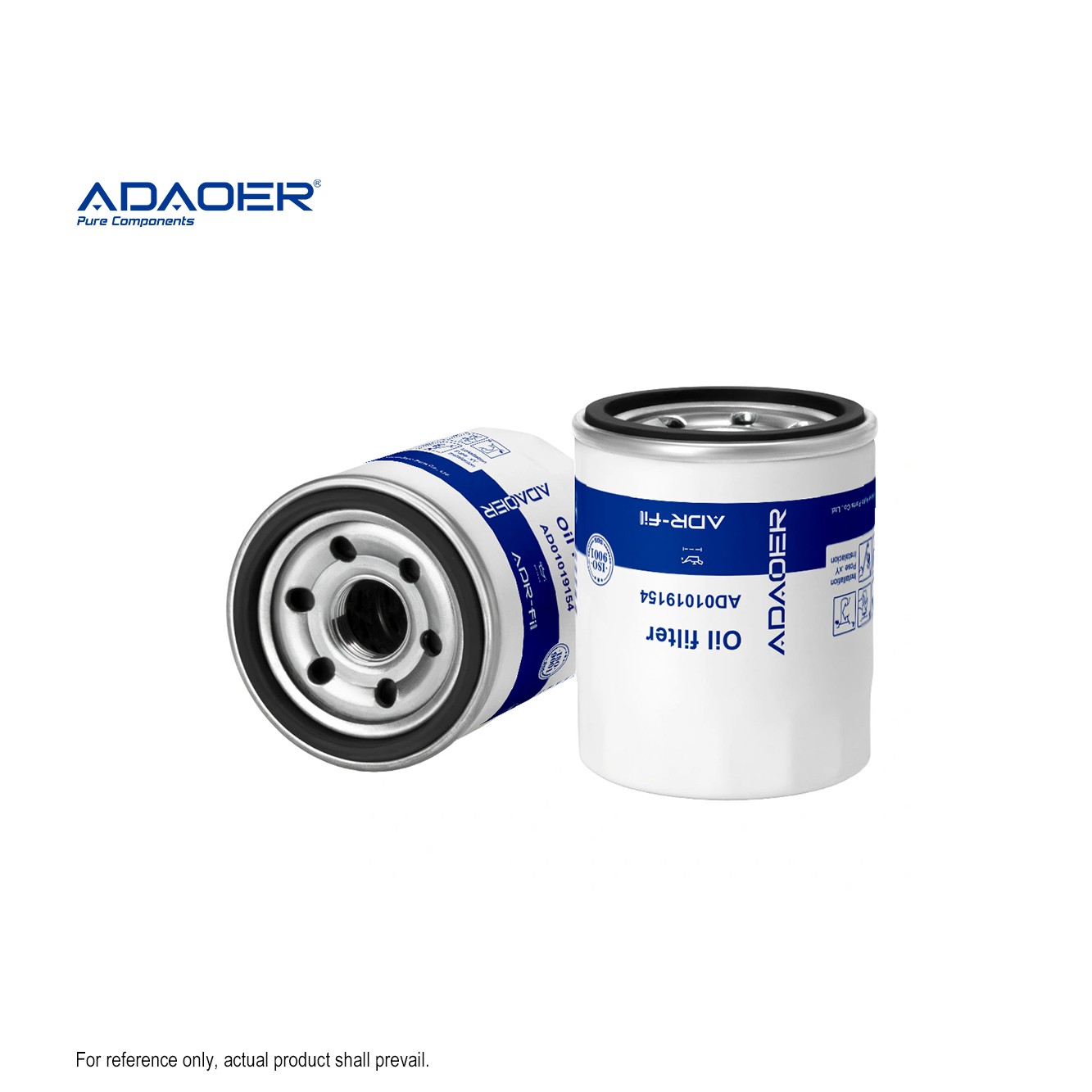
Euro VI engines with DPFs need low-ash engine oils, and many run extended oil drain intervals. The oil filter has to hold more contaminants and maintain its efficiency for longer. Modern designs often combine full-flow and bypass filtration in one housing. The Fleetguard LF14000NN for the Cummins X15, for instance, combines two media types to extend service life. An oil filter that is cheaper but lower in capacity or efficiency can undermine an extended drain interval.
Modern turbocharged engines move large volumes of air, and a restricted air filter increases fuel consumption and can affect EGR and DPF operation. Air filters for newer trucks are generally higher in efficiency and tighter in fit, often with radial seals or panel elements that must seal perfectly. Matching the exact element and seal type matters more than ever.
Many Euro VI engines use closed crankcase ventilation, which adds a filter that must be replaced on schedule. Examples include the crankcase filter kit for the PACCAR MX-13 and the crankcase ventilation filter for Iveco Cursor engines. Older trucks do not have this item.
From Euro IV and V, SCR trucks have a DEF filter or urea pump filter. Examples are the Fleetguard UF106 DEF filter for the Cummins X15 and the urea pump filter WG9925561039 listed for Sinotruk MC11 and MC13 engines. These are easy to forget and are not present on pre-SCR trucks.
Filters often change between emission levels and model years even when the engine name stays the same. The examples below, taken from common catalog references, show why identifying the emission level matters.
|
Engine or Truck |
Earlier Filter |
Later or Different Filter |
|
Volvo D13 fuel filter |
Volvo 20972293 (Fleetguard FF5507) |
Volvo 24137493 and 24137737 listed for later D13 applications |
|
Mack MP7 and MP8, Volvo D11 and D13 fuel filter |
Fleetguard FF5967 |
Fleetguard FF42128NN on 2017 and later engines |
|
Cummins X15 fuel system |
Fleetguard FS19764 and FF5825NN |
10-micron FS20172 and FS20207, and FF5971N from 2020 |
|
MAN D2676 fuel filter |
MAN 81.12503-0085 on earlier TGA, TGS, and TGX |
MAN 51.12503-6004 listed for D1556, D2676, and D3876 |
|
Sinotruk HOWO |
Euro 3 oil filter VG1540070007 |
SCR trucks with MC11 or MC13 add the urea pump filter WG9925561039 |
Part numbers are catalog references and vary by engine, year, and market. Verify before ordering.
Many countries use an emission standard that matches a Euro stage. China VI is described as consistent with Euro VI, with a NOx limit of 0.46 g/kWh and a particulate limit of 10 mg/kWh, and India's Bharat VI corresponds to Euro VI. At the same time, many markets still operate large numbers of Euro III, IV, and V trucks. This is why the filter aftermarket must cover every stage, and why you should check the actual emission level of the truck rather than assume it.
Removing or disabling emission control systems, such as DPF or SCR, is illegal in the EU and in many other markets. This guide covers legitimate maintenance only.
The detailed technical requirements will become clearer as manufacturers develop Euro VII engines, but the direction is predictable: lower emissions over longer service lives and a wider range of operating conditions. Filters are likely to need higher efficiency and more consistent quality across their whole service life. For buyers, this is another reason to choose filters with documented performance rather than price alone.
Does a Euro III truck need different filters from a Euro V truck? Often yes. Even with the same engine family, fuel filtration, oil filter specification, and extra filters such as DEF or urea pump filters can differ. Check the engine and year.
Can I fit a Euro V filter on a Euro VI engine? Not unless the specification is the same. Euro VI engines may require higher efficiency fuel filters, different oil filters, and additional items such as a crankcase filter.
Is the DPF something I replace like a filter? A DPF is part of the exhaust aftertreatment system and is serviced differently, usually by cleaning at intervals set by the manufacturer. It is not a normal replacement filter and is outside the scope of this guide.
Do emission standards change the air dryer? Not directly. The air dryer protects the brake system and is chosen by the brake system, not the emission level, although newer trucks may use electronic air processing units.
Will Euro VII make existing filters obsolete? Euro VII applies to new vehicles from 2028 and 2029. Existing Euro VI trucks will continue to need their current filters for many years.
ADAOER Filter manufactures fuel, oil, air, hydraulic, and cabin filters for trucks, buses, and heavy machinery across a wide range of emission levels, with cross-reference matching and OEM/ODM service. Send us the engine model and year, or the old filter's part number, and we will confirm the match.
Brand names and part numbers are used for identification and compatibility reference only. Bendix, WABCO, Haldex, Knorr-Bremse, Meritor, Volvo, Scania, MAN, Mercedes-Benz, DAF, Iveco, Renault, Cummins, Fleetguard, Donaldson, Mann, Hengst, Baldwin, WIX, Mack, Perkins, Weichai, and Sinotruk are trademarks of their respective owners. ADAOER Filter is an independent manufacturer and is not affiliated with any of them. This article is for general information only and does not replace the vehicle manufacturer's service manual.
How to Find the Right Truck Filter: Part Numbers, Cross-References, and Measurements
Oct. 30, 2026
European Emission Standards (Euro I to Euro VII) and What They Mean for Truck Filters
Oct. 30, 2026
Truck Air Brake System and Air Dryer: How They Work and How to Maintain Them
Oct. 30, 2026
Oct. 27, 2026
Related Products