+86 157 3199 9797

+86 157 3199 9797
Sep. 01, 2026
How an Air Filter Governs Your Engine's Long-Term Health
Meta Description:
Discover why the engine air filter is more than a simple part. This analysis reveals its role as a key regulator of engine performance, efficiency, and longevity.
Focus Keywords:
- air filter
- engine performance
- truck parts
- auto parts
- How often does a car need an air filter?
Tags:
auto parts, engine maintenance, vehicle performance, air filter, truck parts, fuel efficiency
----------------------------------------------------------------------
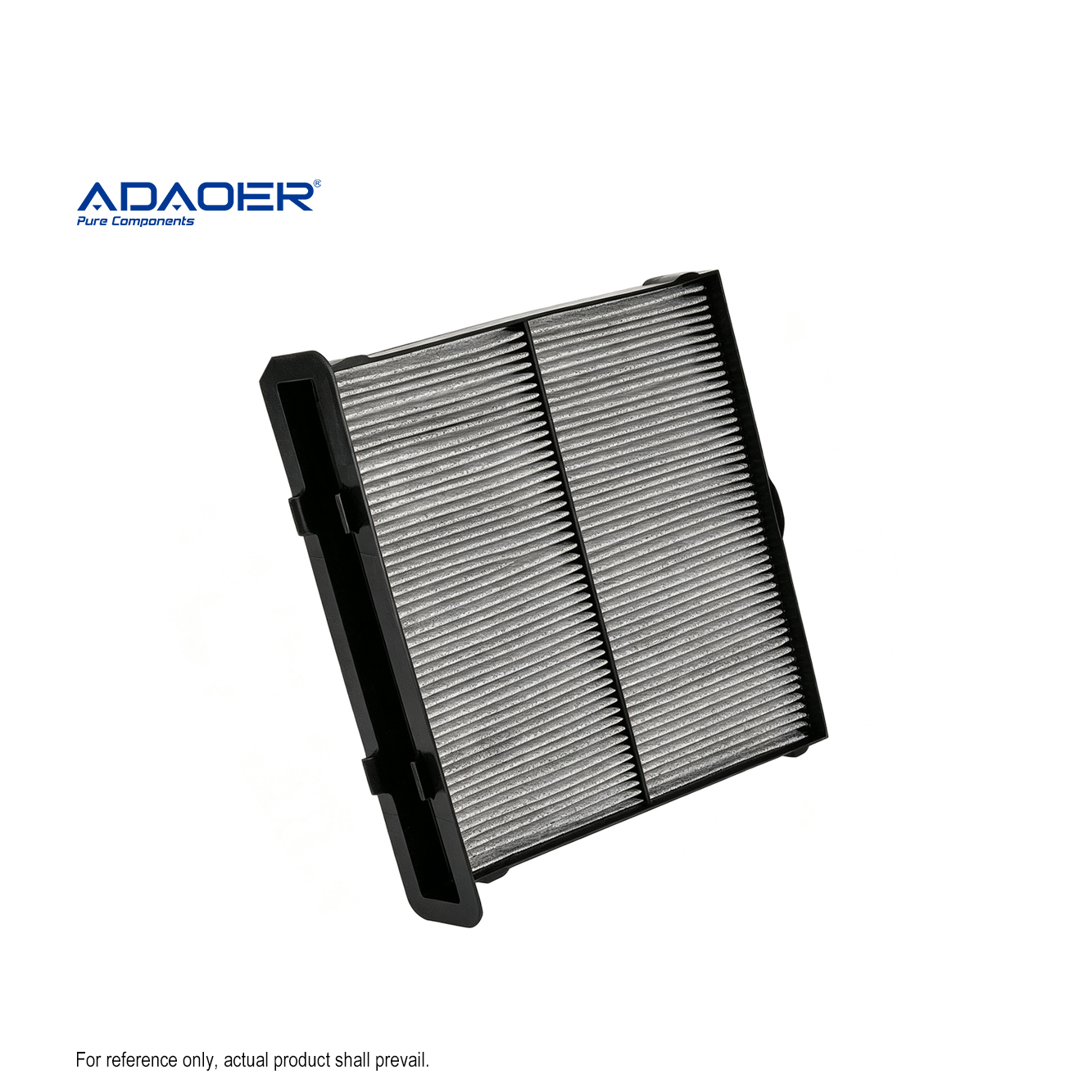
In the complex ecosystem of a modern vehicle, few components are as fundamentally misunderstood as the engine air filter. It is often relegated to the status of a routine, almost trivial, replacement item—a simple mesh screen checked off a list during an oil change. This perception, however, belies its profound importance. The air filter is not a passive gatekeeper; it is the primary regulator of the engine's entire metabolic process. Its condition dictates a cascade of outcomes affecting power, fuel efficiency, and, most critically, the engine's long-term systemic health. To view it as a mere disposable part is to fundamentally misinterpret its role, akin to believing that the quality of the air we breathe has no bearing on our own vitality.
The primary function of an air filter extends far beyond the simplistic task of blocking dust and debris. Its critical purpose is to enable the precise chemical balance required for optimal internal combustion—a principle known as stoichiometry. For a gasoline engine, this ideal ratio is approximately 14.7 parts air to one part fuel. The vehicle's Engine Control Unit (ECU) constantly monitors sensor data to maintain this delicate equilibrium. When an air filter becomes clogged with particulates, it restricts the volume of air entering the intake manifold. This creates an oxygen deficit, forcing the engine into a state of metabolic stress.
The ECU attempts to compensate for this "asphyxiation" by adjusting fuel delivery, but its ability to do so is limited. The result is a richer fuel mixture, where excess fuel is injected relative to the available air. This imbalance leads to incomplete combustion, a process that not only wastes fuel but also initiates a chain of degrading effects throughout the engine. The humble paper or cotton-gauze filter is therefore not just a shield; it is the enabler of the engine's most fundamental chemical reaction. Its capacity to permit unrestricted airflow is directly proportional to the engine's ability to operate at peak thermodynamic efficiency.
The consequences of a restricted air supply are not isolated to a momentary dip in performance; they compound over time, creating a cascade of systemic issues. Incomplete combustion from a rich fuel mixture leaves behind a residue of unburnt hydrocarbons. This carbon soot begins to accumulate on critical engine components. Spark plugs become fouled, weakening their ability to produce a strong spark and leading to misfires. Intake valves and piston crowns develop a layer of carbon buildup, which can disrupt airflow patterns and even increase the engine's compression ratio to dangerous levels.
Furthermore, sensitive downstream components like oxygen sensors and catalytic converters are put under duress. The oxygen sensors, which provide crucial feedback to the ECU, can become coated in soot, sending inaccurate readings and exacerbating the air-fuel imbalance. The catalytic converter, responsible for neutralizing harmful emissions, must work harder to burn off the excess pollutants, potentially leading to overheating and premature failure—a costly repair originating from a neglected and inexpensive part. This slow, cumulative degradation is why a failing air filter often goes unnoticed until significant performance loss or a check-engine light appears. It is a quiet erosion of the engine's internal health, initiated by a failure to maintain its "respiratory" system.
The standard maintenance schedule often recommends replacing an air filter every 15,000 to 30,000 miles. While this provides a useful baseline, it encourages a "one-size-fits-all" mentality that ignores a crucial piece of information: the filter’s condition is a direct reflection of the vehicle’s operating environment. A truck operating on dusty rural roads or in construction zones will ingest vastly more particulate matter than a sedan driven primarily on clean suburban highways. Therefore, the question shouldn't just be "how often," but "what is the filter telling me?"
Adopting a diagnostic approach transforms the filter from a simple maintenance item into an indicator of environmental stress. A filter that is excessively dirty after only 10,000 miles signals that the vehicle is operating in harsh conditions, suggesting that other maintenance intervals may need to be accelerated as well. Conversely, a filter that appears relatively clean at 20,000 miles provides confidence in the current schedule. Treating the air filter check as a data point allows for a more tailored and intelligent maintenance strategy, ensuring the engine receives the clean air it needs based on its actual working life, not just an arbitrary number in an owner's manual.
In an automotive landscape where cost-cutting is common, it can be tempting to view all filters as interchangeable commodities. Yet, the quality of the filter media and its construction have a direct and measurable impact on both filtration efficiency and airflow capacity. High-quality auto parts, particularly for critical components like filters, are designed with superior materials—be it high-density paper, multi-layered cotton gauze, or advanced synthetic fibers. These materials are engineered to trap microscopic particles without unduly impeding the flow of air.
Inferior filters, by contrast, often present a trade-off. They may either use a less-dense medium that allows harmful contaminants to pass through into the engine, or they use a thick, restrictive medium that chokes airflow from the moment it is installed. For workhorse vehicles that rely on robust truck parts, this distinction is even more critical. A high-performance diesel or gasoline engine demands immense volumes of air, and a substandard filter can significantly handicap its power and torque output. Investing in a quality air filter is not an over-expenditure; it is a calculated decision to preserve the integrity of the entire powertrain.
Ultimately, the engine air filter serves as a powerful metaphor for how small, foundational elements can govern the health of a complex system. Its role is not passive but profoundly active, regulating the very breath of the engine. By reframing our understanding of this component—from a disposable screen to a critical metabolic regulator—we can make more informed decisions that move beyond rote maintenance and toward a proactive strategy for ensuring vehicle performance, efficiency, and true long-term durability.
Mercedes-Benz Actros A Model Overview and Fuel, Oil & Air Filter Maintenance Guide
Sep. 14, 2026
Truck Fuel Filter Maintenance and Replacement: A Complete Guide
Sep. 08, 2026
How an Air Filter Governs Your Engine's Long-Term Health
Sep. 01, 2026
About ADAOER – Professional Automotive Filter Manufacturer in China
Aug. 27, 2026
Related Products